As discussed previously, to participate in the Children & Nature Network's Let's G.O. (Get Outside)! month, we attended the Spring Festival at the Shipley Nature Center in Huntington Beach.
There were two maypoles, one for little kidlets and one for older kidlets. But there were some older women who were sort of running the maypole activity that were REALLY serious about them doing it correctly. They kept stopping the music and the kids and trying to explain things. At first I thought it was just misguided attempts to control the chaos inherent in children. Then I settled on the more entertaining notion that these women were in fact witches and NEEDED these maypoles to be wrapped correctly for their own purposes, entertaining children was just a ruse.
In the center of this picture, the less shiny black things that look like leaves are actually a mourning cloak butterfly. The Wee Bairn and I joined a guided tour to the Monarch Waystation inside the Shipley Nature Center. The guide was awesome. He was great at spotting and identifying butterflies. He also was my kind of crotchety old retired teacher. He was all crabby about invasive species and "sanitary" landfills. I bet when he watches Jurassic Park he roots for the dinosaurs. I'd invite him on all of my nature hikes if I could.
Also on our tour we learned what those little white fluff balls that float around this time of year are: the seeds of black willow trees and mule fat.
Yup, a plant called "mule fat." We also learned about insect galls. Which led to this parenting moment observed: 10-year-old-ish daughter upon taking a DIGITAL picture of an insect gall: I got a great picture!
Mom to 10-year-old-ish daughter: Stop! I don't want pictures of ugly things. Why do you take pictures of ugly things? Stop taking pictures of that.
We learned that duck weed, an example of which is perched on the tip of our guide's finger, is the smallest flowering plant.
We also spotted a female hummingbird on the trail.
At the end of the tour we stopped by the Vermiculture Center to learn about worms. Here they're showing us a worm egg.
Watching over us as we learned about worms was a tree swallow sitting in its nesting box.
We also learned about the Nature Scene Investigator program run by Get Outdoors! OC (again with the exclamation points). We might have to look into this for B!ome Tour 20!!!
Saturday, April 30, 2011
We Went Outside!
Thursday, April 28, 2011
CSA Basket . . . Lost Count
I'm showing off my roses with the CSA basket to make up for skipping enough basket posts that I've lost count. We're definitely into the spring quarter, so we've officially been getting baskets for a year now. This week's CSA basket contained: Romaine, Red Leaf Lettuce, Turnips, Radishes, Cauliflower, Leeks, Carrots, Beets, Chard, Fennel, Avocado, Snow Peas, Cabbage, Strawberries! Navel Oranges, Tangerines, Celery, Parsley, and Cilantro. I traded in the fennel and cabbage for more carrots and oranges. The Wee Bairn LOVES oranges.
I used the red leaf lettuce and snow peas in an Asian chicken salad for dinner. So, if you don't already know, we have extremely limited backyard space. We compost, but we can fill up that little compost bin pretty quickly especially on CSA Basket Day. When I can on CSA Basket Day, I like to trim off all the greens I'm not going to use, like from the tops of carrots and radishes, and give them to Bridget for her donkey Boo Boo, pictured above on the right. I believe the horse helping Boo Boo with the composting is Yogi.
Bridget's chickens get in on the composting as well. Which makes me feel better about stealing so many of their eggs.
Tuesday, April 26, 2011
Let's Get Outside!
The Children & Nature Network is making April Let's G.O. (Get Outside)! month.
The goal of Let’s G.O.! events is to bring together intergenerational groups of people to get outside together to be active, have fun and connect with nature.The nearest event to us is a Spring Festival at the Shipley Nature Center in Huntington Beach. It's coming up this Saturday, April 30th, from 9:00 a.m. - 2:00 p.m.
The Children & Nature Network is chaired by Richard Louv, the author of Last Child in the Woods: Saving Our Children From Nature-Deficit Disorder
Then I started following The Boy's Almanac, a blog by "two mothers constantly striving to maintain a wild, self-sufficient childhood for our boys and wanting to revive the old school methods of practical scouting, bypassing the modern organization and its discriminating baggage." I like that mission statement. And they're not sexist, they just don't have girls. The blog follows their adventures as they undertake the projects in The American Boy's Handy Book: What to Do and How to Do It, Centennial Edition. A bit advanced for a 16-month-old, but I'm thinking longer term.
In the shorter term, we've been contemplating a series of kidlet-centric adventures this summer with easy hikes for jogging strollers within an hour or so of Fullerton with the goal of introducing the wee bairn to as many different biomes as possible. Our friend Sarah Gilman even found us a book to help us on our way: Habitats Alive!
I wonder if all of these exclamation points get kids into nature more than book and event titles without exclamation points would. Get ready for B!ome Tour 20!!!
Monday, April 25, 2011
Scantastic!
I celebrated Earth Day by recycling my deceased Brother printer and buying a Lexmark Prevail Pro705 printer/scanner/copier/faxer. My goal: paperlessness. I have read the User Manual (in PDF format on my computer screen . . . paperlessness here I come!) from virtual cover to virtual cover. Now I'm checking out the suggestions in the comments to two posts over at AskMeFi:
I didn't even know what documents I am supposed to be keeping and which ones I can get rid of until I read this piece over at Consumer Reports. Please post comments here with any tips, tricks, advice, suggestions, comments, concerns, et cetera.Saturday, April 23, 2011
We Changed!
The Wee Bairn and I are now World Record holders. Well, I haven't heard if it's official or not, but we did participate in The Great Cloth Diaper Change at No Sugar Added this morning. The mom that entered before us had bicycled there with her tiny tot in the smallest little baby seat ever. There were so many parents wearing their babies and nursing their babies and just generally being as granola crunchy as you can be with babies. Made me feel better about the universe. It was PACKED! I'm guessing that was the case all over as I received a text from Terri in Durham, NC, around 9 a.m. our time that read "so.many.BABIES!"
Here we have the record breaking diaper. The Wee Bairn was a little unsure when I put her down, but then she turned to her right and saw a little 4-month-old baby girl and she turned to her left and saw a little 6-week-old baby boy and looked at me, smiled, and said, "Baby!"
Thursday, April 14, 2011
The Great Cloth Diaper Change
Perusing my usual parenting blogs, I came across a post at Inhabitots about The Great Cloth Diaper Change on April 23, 2011. Basically, combine Earth Day, parenting, and the Guinness World Records, and you get the idea to change more wee bairns into a cloth diaper at the same time than ever before.
Whether you're part of the gDiaper Mommy Militia or simply a fan of GroVia (formerly GroBaby), FuzziBunz, bumGenius, or good ol' prefolds, please participate. Let's show folks that cloth diapers are a real option for today’s families. If you are all out of babies needing diapers or otherwise unable to participate directly, please consider supporting the Real Diaper Association, a non-profit organization that advocates for cloth diapering.
We'll be participating at our current favorite granola crunchy baby store: No Sugar Added in Claremont. FYI, we'll be changing from a GroBaby into an organic unbleached prefold with an organic Imse Vimse cover with a Snappi closure, which is my current most favored diapering solution. Let's save the planet one nappy at a time!
Monday, April 04, 2011
March's Au Lait du Mois: Panir (Paneer)

Yes, yes, I know it's April. But I started the panir . . . O.K. I didn't even start the panir until April 1st. But I thought about it and bought all the ingredients in March. So it still counts as March's Au Lait du Mois.
Panir is super easy and requires no esoteric cheese making supplies (if you substitute any clean, smooth cloth for the butter muslin, which you could if you were butter muslin-less). So if you're contemplating the idea of cheese but you don't want to make any investment, start with panir. I don't even think you need a thermometer considering both Rebecca and I didn't follow the temperature guidelines in the recipe and still had successful panir. Just wait until the curds really start separating from the whey and glomming together and you're ready for the next step.
I didn't use raw milk this time. Instead I used organic creamline milk, which has been pasteurized but not homogenized. I picked up half a gallon at Trader Joe's.
I tried the whey lemonade as suggested in the booklet from the Gourmet Home Dairy Kit. Maybe if I had clearer whey it would have been more "refreshing." As it was, there was sort of a creamy background to the whey lemonade that did not really appeal to me. But it's certainly worth a try. 
I made the curried panir potato rounds following the recipe in Home Cheese Making: Recipes for 75 Delicious Cheeses by Ricki Carrol. An almost identical recipe appears in the booklet that comes with the Gourmet Home Dairy Kit. I made a smaller spice-free version for the wee bairn. She dug 'em. She also dug the panir straight. I served the curried panir potato rounds with Thai Yellow Curry Sauce from Trader Joe's as a dip. They were a big hit.
The directions for panir in Home Cheese Making: Recipes for 75 Delicious Cheeses by Ricki Carrol are pretty different from the directions in the booklet that comes with the Gourmet Home Dairy Kit. Not sure which one was published first. I followed the pamphlet's directions, so that's what I adapted below.
Panir adapted from Ricki Carroll's Gourmet Home Dairy Kit
Ingredients:
Implements:
Procedure:
, the recipe suggests hanging the cheese for 2 to 3 hours. As a busy, sleepless Mom, I hung mine for about 12 hours.

Curried Panir Potato Rounds adapted from Home Cheese Making: Recipes for 75 Delicious Cheeses by Ricki Carrol
Ingredients:
Procedure:
Previous Au Lait du Mois:
Thursday, March 31, 2011
Two pizzas, both yummy
Sauteed leeks and ricotta cheese base, topped with parmesan and a little olive oil.
Tomato sauce base with sauteed mushrooms and spinach, topped with some mozzarella cheese. I got the mushrooms at the farmer's market - I'm not sure what kind they were, but they were seriously tasty.
I the made pizza dough the other night and put it in the refrigerator. I've made it before and it was good. It turned out better this time but I don't know what I did differently. It's possible that I used less flour since I was running low. I used the dough recipe from Peter Rainhart. I preheat my pizza stone in the oven and then I take it out and make the pizza on the stone so I don't have to do a transfer of the pizza once all the toppings are on it.
Monday, March 28, 2011
Accidental trademarking
The one-sentence summary: "constituative" and "metability" are not words.
I've been reading an excellent book, Rules of Play: Game Design Fundamentals by Katie Salen and Eric Zimmerman. It is very much in line with the sort of study and analysis of games that I'm interested in.
But in the book, the authors describe three kinds of rules (as you can imagine, rules are an important feature of games). The three kinds of rules are constituative, operational, and implicit. And to me, the "constituative" rules are exactly those rules that I would call "constitutive".
Now, I wouldn't make a big deal about this if it were an incidental thing, but it's a big component in one of the big ideas of the book. And even then I wouldn't post about it if "constituative" were actually another spelling (or another word entirely). So I googled it.
Turns out that every use of "constituative" related to game rules is a reference to this book, either directly or indirectly. And I wondered, is the field of game studies going to use this and pretend it's a new word long enough that it actually becomes one?
"Constituative" is not a completely uncommon misspelling of "constitutive". (Google gets 6,650 hits, vs. 8,040,000 for constitutive.) But it's pretty clear it's a misspelling. There's a kind of gene that's called a "constituative promoter" (441 results), but the exact same definition appears for a "constitutive promoter" (217,000 results). One of the top hits for "constituative" is about a "constituative equation". But search Google for "constituative equation" (or "constitutive law") and Google won't just suggest the other spelling -- it just gives you the results for the conventional spelling.
When I looked up "constituative rule", and insisted that Google show you that and not "constitutive rule", seven of the ten front page results are related to game studies. The top one is the Google Books result for this very book. The other six either directly or indirectly refer to the book. Perhaps surprisingly, a search of "constitutive rule games" turns up several philosophical works, which use game rules as an example of "constitutive rules". But many games studies people are getting exposed to this idea through the Salen and Zimmerman book, and the spelling error is propagating. Eventually, it's possible that "constituative" will become an alternate spelling, used by game study people.
The viral spread of a new term is perhaps Betty K. Garner's intention: in her book Getting to "Got It!": Helping Struggling Students Learn How to Learn , she coins the word "metability", meaning "the ability to learn, create, and change". I personally hate this word, not least because "meta" gets used too much and usually wrongly (see this charming description of "meta"). Nonetheless, I understand the motivation.
There's a natural desire to condense your main point, the concept you want to convey to the world, into a little digestible morsel that your readers will remember, retain, and repeat. If you can encapsulate your idea into a word or little phrase, it could carry your little meme across the world, and perhaps across the ages.
But sometimes the dream of an immortal idiom runs ahead of the concept itself: I've often come up with clever acronyms for a concept that I'm just not willing to put the time and commitment into making a real thing. I once told a class to use SPEED (Solve Problems Each and Every Day). But this was a catchy phrase, not a system or an idea, and I never referred to it again. I'm sure no one else did, either.
Back to the original case, I'm pretty confident that Salen and Zimmerman had no intention of generating game studies-specific jargon by misspelling "constitutive". But in a small way (I daresay the field of game studies is fairly small, overall) I think this is happening. So I urge them to correct it, in the next edition.
Friday, March 25, 2011
Triangle Fire Centennial, Regulation and Labor Under Attack
Today marks the one hundredth anniversary of the fire at the Triangle Shirtwaist factory in New York City in which 146 garment workers died. Let's take the opportunity to remind ourselves why organized labor should have the ability to negotiate working conditions and why the government should have the power to regulate. As Robert Reich said in his biweekly commentary for Marketplace yesterday,
Those who argue that regulations kill jobs ignore an important fact: Lack of adequate regulation kills people.He was starting from the failure of GE's reactors in Fukushima. Sadly, the logic that applied to a horrible tragedy one hundred years ago still bears repeating today.
Wednesday, March 23, 2011
March's Au Lait Du Mois: Paneer (Panir)
I followed the directions exactly, heating two quarts of milk and the juice of two lemons until the temperature reached 165+ degrees. At about 120 degrees or so, it looked like what I thought was supposed to happen. I had big chunks of curd and the liquid was transparent. But, I was supposed to go hotter, so I kept stirring. At about 165 degrees, the curds got small and diffuse and the whey became cloudy again. But, I was too far in. So, I went ahead and poured it through the cheesecloth and drained it. I did end up getting a very firm cheese, but the whey was still cloudy. The cheese tasted good. Bob was willing to drink the whey, that I sweetened with a little sugar to make lemonade as suggested in the recipe book.
I used the panir to make butter panir masala. (It was a recipe I found on the web, but can no longer find.) Basically, you browned a red onion, pureed it with garlic, ginger and fresh chili. Then heated it with pureed tomatoes and turmeric, garam masala, coriander and chili powder and some water. Then stir in some yogurt and add the panir. It was tasty. I added some spinach and peas. The panir however disintegrated in the sauce.
Thursday, March 17, 2011
CSA Basket 25

Yes, I skipped posting about our previous two baskets. Life gets busy. But to make it up to you, this post contains not one but THREE pictures. Why? Because the baskets this week were BEAUTIFUL, a vision in red and green and ranunculuses (or is that ranunculi?). This week's basket contained: Ranunculus Flowers, Iceberg Lettuce, Romaine Lettuce, Cilantro, Turnips, Carrots, Potatoes, Beets, Mixed Radishes, Long Radishes, Navel Oranges, Fuji Apples, Kale, Kohlrabi, Kiwi, Strawberries, and Pears. 
These are the baskets all lined up under the big ficus tree outside the Fullerton Arboretum waiting to be picked up.
Any radish recipes would be greatly appreciated.
Tuesday, March 08, 2011
March's Pizza del Mese: Broccoli and Tomato Sauce Pizza

This is my third pizza employing the delectable Classic Pizza Sauce from January's Pizza Margherita. Like last month, I tried a whole different dough--Spelt Pizza Dough.
Here's a telling little bit of trivia. There are eight pizza dough recipes in Pizza: Grill It, Bake It, Love It! by Bruce Weinstein and Mark Scarbrough. Every pizza recipe recommends a dough to use and offers a backup. Only two of the dough recipes never appear as a "first choice" in a pizza recipe: the Gluten-free Pizza Dough and this month's Spelt Pizza Dough. The Spelt Pizza Dough, slightly sweet and nutty in flavor, is not going to be everyone's favorite, but it is a healthier alternative to the white flour doughs offered.
I didn't bother with the Window Pane Test because, according to Pizza: Grill It, Bake It, Love It! by Bruce Weinstein and Mark Scarbrough, the spelt flour doesn't have the higher level of glutens present in doughs made with all-purpose or bread flour. The book also says that spelt is high in protein and the potato flour in the recipe gives the dough some elasticity. I'm beginning to catch on. Gluten is a type of protein present in wheat, but not all proteins present in wheat are gluten. Spelt is high in non-gluten proteins, so while it's good for you in the sense that it has a higher ratio of proteins to carbohydrates, spelt doughs lack elasticity, don't keep their shape as well, and, once baked, don't have as chewy texture.
Once baked, this spelt crust sort of breaks into pieces on contact. The downside: it totally would not come off the pizza pan in one piece, or even in a whole slice. The upside: if chewy doughs give your jaw trouble, this is a yummy, healthy alternative. I don't just mean the aged and TMJ sufferers. I think this is the perfect crust for a toddler's first pizza. And the healthy toppings on the Broccoli and Tomato Sauce Pizza would probably make this combination perfect overall for a toddler's first pizza. I haven't tried it out on my toddler yet, but I'm definitely going to.
Where the recipe calls for 3 oz. provolone, Muenster, or Havarti, shredded, I used Beemster with Mustard, a cow's milk cheese from Holland, which was recommended by the geniuses at The Cheese Cave. It is SO good. It sets off the spicy pizza sauce and roasted red pepper puree perfectly. Like last time, where the recipe calls for 1 oz. Parmigiano-Reggiano or Grana Padano, finely grated, I used Canestrato di Filiano, also from The Cheese Cave. The combination with the broccoli was so amazing you might not notice it's all on top of a healthy crust.

Broccoli and Tomato Sauce Pizza adapted from Pizza: Grill It, Bake It, Love It! by Bruce Weinstein and Mark Scarbrough
Ingredients
Procedure
Spelt Pizza Dough adapted from Pizza: Grill It, Bake It, Love It! by Bruce Weinstein and Mark Scarbrough
Ingredients
Procedure
Previous Pizza del Mese:
January's Pizza del Mese: Pizza Margherita
February's Pizza del Mese: Mushroom Pizza
Monday, March 07, 2011
Yogurt Update
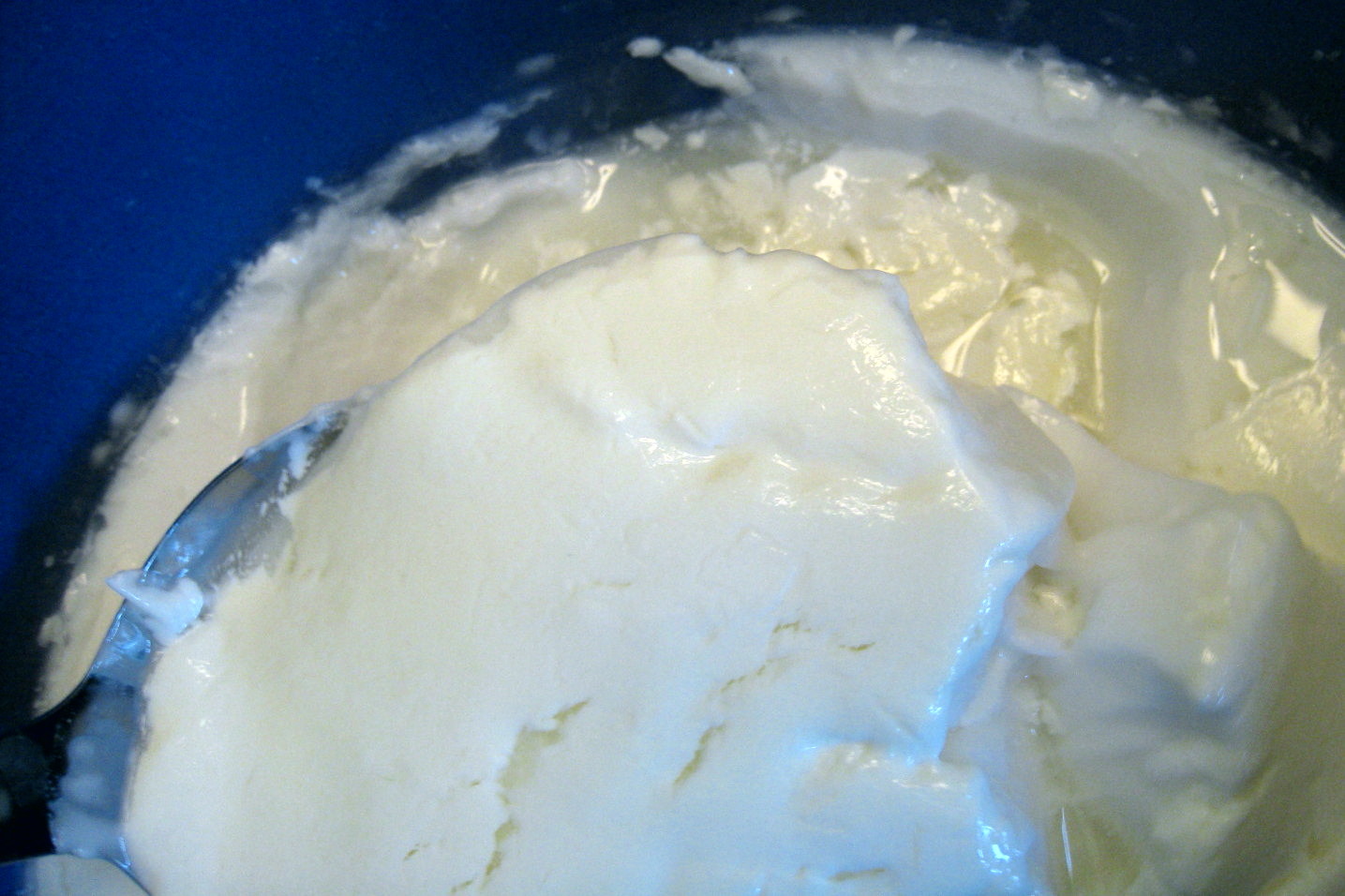
I tried making yogurt last night. It was a busy weekend and I started the yogurt process too close to Dexter's bedtime. I ended up heating the milk too high (about 200 degrees) and letting it cool too much (about 85 degrees.) I decided to try making the yogurt anyhow. When I got up this morning, the 'yogurt' was still milk. I decided to try reheating the milk to see what happens. I microwaved the milk until it reached about 105 degrees (I was scared to go longer for fear of killing the yeast.) It was a success! I now have yogurt. Woohoo!
Friday, February 25, 2011
February's Pizza del Mese: Mushroom Pizza

With three pizzas worth of Classic Pizza Sauce in the freezer from last month's Pizza Margherita, I figured I better follow up with a pizza that uses that sauce, but tries a whole different dough--Parmesan Pizza Dough.
I wasn't totally confident in my crust last time. I don't think I kneaded it long enough to develop the gluten. Sort of by accident I pulled a bit off and I think it tore a little too easily. What I should have done was subjected my dough to the Window Pane Test. This month, I did just that. It made a huge difference. For one, the dough spread out into the pan much more easily. Also, the voluminous edge was easy to achieve without increasing the recipe by 50%, as Mark Scarbrough suggested in a comment to last month's post. It almost formed itself. I really think my less than awesome crust last month is almost entirely due to under-kneading. Granted, this is an entirely different dough from last month's Classic Pizza Dough. This month I tried Parmesan Pizza Dough. I'll have to revisit the Classic Pizza Dough armed with the Window Pane Test.
Other variables include two recipe substitutions in the Parmesan Pizza Dough recipe. I substituted whey from making Fromage Blanc for the water. I also substituted baking flour for all-purpose flour, with the idea that bread flour has more gluten than all-purpose. The look was right. And the hint of cheese flavor was awesome. But something about the texture was off. My vocabulary for describing pizza dough is pretty limited, but the first words that popped into my mind were "Wonder Bread." Mind you, I've never actually eaten Wonder Bread, so it's more of an abstract association than a real comparison. Maybe it wasn't chewy enough? Is pizza crust supposed to be chewy? It was definitely a step in the right direction from last week.
The recipe for the dough and the pizza call for Parmigiano-Reggiano. I used an Italian sheep cheese called Canestrato di Filiano which was recommended by the geniuses at The Cheese Cave. It's got more of a cheese flavor than Parmigiano-Reggiano. Again, my vocabulary is failing me. Gastronomichael has a post with a lot of fun information about this delectable cheese. If you can find it, I highly recommend Canestrato di Filiano. I also had it shredded on some pesto pasta. Yum!
Between the improved crust and the awesome cheese, this was a pretty darned good pizza. Adding Worcestershire sauce to the mushrooms in the frying pan makes them so much more flavorful and really makes you feel like you're eating something meaty. This pizza would make a great Meatless Monday meal for a devout carnivore. Once I perfect my crust, I'm definitely revisiting this recipe.
In other pizza news, the New York Times did an article allegedly about pepperoni pizza, but really about artisanal meat curers, which might be called salumeria. For 2012 maybe I should do cured meat of the month. What do you think? 
Mushroom Pizza adapted from Pizza: Grill It, Bake It, Love It! by Bruce Weinstein and Mark Scarbrough
Ingredients
Procedure
Parmesan Pizza Dough adapted from Pizza: Grill It, Bake It, Love It! by Bruce Weinstein and Mark Scarbrough
Ingredients
Procedure
Previous Pizza del Mese:
January's Pizza del Mese: Pizza Margherita
Tuesday, February 15, 2011
Fromage Blanc Take Two
Gaze upon my cheese.
I followed the same directions as Sarah except that I only used 1/2 a gallon of whole milk. I let my culture develop in the Yogotherm for about 26 hours (do to my work schedule, not based on the cheese.) Even with that amount of time, I didn't have very solid curds. It was more like yogurt consistency. I didn't want to leave it longer so I went ahead and spooned it into a butter muslin lined strainer and let it drain away. I ended up with about 5 cups of whey and one cup of cheese. I don't know what happened to the other 2 cups of liquid. I assume that it soaked into the muslin. I let it drain for about 6 hours. At one point, I got impatient and squeezed out the whey. That seemed to move things along, but I believe that it make the cheese much harder to get off the cloth. Any suggestions for that? Also, how do you clean it? I ended up rinsing it in water for a long time.
Any hoo. My cheese was pretty firm - like cream cheese. It's pretty tasty, although I only just tasted it, I haven't used it in anything. It tastes pretty similar to the yogurt cheese.
Cheese making debris.
Monday, February 14, 2011
February's Au Lait du Mois: Fromage Blanc

Last month we kicked off our Au Lait du Mois with the oft made, oft consumed, oft written about yogurt. This month, its opposite: Fromage Blanc. I looked in all my usual culinary resources and there is NOTHING on fromage blanc. I could write a thesis on yogurt, but barely a haiku on fromage blanc.
separate your curds and whey,
avoid orange bloom.
In my search for a little more information on Fromage Blanc I found this interview from The Splendid Table with Ricki Carrol about cheese making on a page with a slightly different recipe for Fromage Blanc. I think the difference is that in the radio program Ricki mentions that if you're working with unpasteurized milk, you need to heat it to 180 degrees to pasteurize it before continuing, whereas the booklet assumes you're working with pasteurized milk.
I thought I'd double check the instructions by going to Ricki Carroll's website. Glad I did. There are much more detailed instructions with pictures. So before
you make your Fromage Blanc be sure to check out Jim Wallace's instructions:
http://www.cheesemaking.com/FromageBlanc.html
Another heads up, the directions in the booklet that comes with the Gourmet Home Dairy Kit say to use a gallon of milk and to then pour it into the Yogotherm. The Yogotherm does not hold a gallon of milk. According to the box, it's capacity is 2 L which is is a little more than half a gallon. I ended up putting the rest of my gallon in a bowl. I split the culture roughly between the two. Not very scientific. I don't know if the ratio of culture to milk was the determining factor or the cooler fermentation temperature, but the the milk that fermented in the bowl wrapped in a quilt fermented into much more firm curds with much clearer whey than the milk in the Yogotherm. As I describe in the instructions that follow, when I make Fromage Blanc again, I will follow the advice from the website and just leave the milk in the pot and wrap it up in a blanket.
I was initially somewhat dubious about my cheese. In both the Yogotherm and the bowl, I got an orange bloom as pictured above. Bridget reassures me that this is harmless native/heirloom/indigenous bacteria that is what makes home cheese making great. The cheese tastes good and it doesn't look orange. My taste tester and I haven't died from food poisoning due to the orange bloom of native/heirloom/indigenous bacteria. So it's all good.

It took two different strainers to drain because the volume was so large. I drained the curds for 8 hours, and got a kind of inconsistent texture. The edges were like super dry cream cheese while the middle was more watery than my yogurt. I separated out the watery middle from one strainer and tied it up to drain into the sink overnight. But then I just sorta gave up and mixed the watery middle from the second strainer into the cheese. The next day I mixed the now-drier cheese that had hung over the sink into the rest. It turned into a very smooth whipped cream cheese consistency. It yielded probably three cups of cheese, maybe more.
Fromage Blanc adapted from Ricki Carroll's Gourmet Home Dairy Kit and Fromage Blanc . . . the details! by Jim Wallace
Ingredients:
- 1 gal. raw milk
- 1 packet Fromage Blanc Direct Set Culture
Implements:
- sieve
- 1 gal. pot with lid
- Dairy Thermometer
- Slotted spoon
- butter muslin
Procedure:
- Strain milk through sieve into a 1 gal. pot and affix the thermometer in a readable position.
- If you want to pasteurize your raw milk, put the pot on medium heat and stir occasionally until it reaches 162 degrees. Remove from heat and allow to cool to 86 degrees. If you're using pasteurized milk or you're looking forward to the exciting world of true raw milk fromage blanc, put the pot on medium heat and stir occasionally until it reaches 86 degrees.
- Once milk reaches 86 degrees, sprinkle the Fromage Direct Set Culture on the surface of the milk. Wait one minute. Stir the culture into the milk for a couple of minutes.
- Put the top on the pot and move the pot somewhere it can hang out undisturbed. Wrap the pot in a quilt or blanket to insulate it a tad. You'd like it to stay above 68 degrees.

- After 12 to 24 hours (I waited 24 hours), you can start checking for doneness. The curd should have pulled away from the edge of the pot so you can see the clearer whey in which it is floating, as pictured above.

- Line the sieve (or sieves) with butter muslin. Ladle the curd into the muslin-lined sieve and allow to drain for 4 to 12 hours depending on the desired consistency.
- Store under refrigeration up to 10 days. This cheese may be frozen for several months (though I haven't tried it so who knows that the consistency would be like).

Like Jim Wallace discusses in Fromage Blanc . . . the details!, I was amazed at the versatility of fromage blanc. I made a quick apple galette one night, and when my taste tester lamented the lack of ice cream, I just mixed some sugar and vanilla into some fromage blanc and it worked as a very nice alternative. As suggested in the booklet accompanying the Gourmet Home Dairy Kit, I made an herb cheese spread with some of the fromage blanc. I just mixed in some Penzeys Parisien Bonnes Herbes an hour or so before serving.
It was AWESOME on Wheat Thins.

But here's the real reason why I chose Fromage Blanc for February's Au Lait du Mois: Coeur a la Creme.

Coeur a la Creme adapted from Ricki Carroll's Gourmet Home Dairy Kit
Ingredients:
- 2 egg whites
- 1 C Fromage Blanc
- 1 T sugar
- 1 T heavy cream
Procedure:
- Beat two egg whites until stiff peaks form.
- In a separate bowl, mix together the rest of the ingredients until smooth.
- Fold the egg whites into the mixture.
- On a cookie sheet lined with a silicone baking mat, or other non-permeable, non-taste transferring medium, set your heart-shaped cookie cutters. Cover the cookie cutters with a layer of butter muslin. Fill each muslin-lined cookie cutter with the mixture. Cover with plastic wrap. Refrigerate at least six hours (I waited about 25 hours).
- Unmold your coeur a la creme and garnish as you please. Ricki suggests fresh fruit, syrup, or melted chocolate. I used strawberry preserves and heart-shaped biscuits.

Next Valentine's Day, I think I'll add a aplit vanilla bean to the milk at the beginning of the cheese making process and add an extra tablespoon of sugar to the Coeur a la Creme recipe.
Previous Au Lait du Mois:
Thursday, February 03, 2011
CSA Basket 22
This week's (not very artfully styled) basket included Radishes, Iceberg and Red Leaf Lettuce, Fennel, Oranges, Cilantro, Parsley, Chard, Broccoli, Apples, Potatoes, Onion, Grapefruit, Carrots, Pears, Cabbage, Celery, Spinach, and Kohlrabi. I traded the fennel, kohlrabi, and pears for more spinach, more potatoes, and more oranges (we're all working through a cold right now and need lots of vitamin C).
Last week when I was grilling chicken for dinner I threw another breast on the grill, sliced it up, and froze it in anticipation of this week's basket. Instead of being so overwhelmed by the CSA basket that I didn't have time to make dinner, I thawed the chicken, whisked together some honey and mustard for a dressing, and had a grilled chicken salad ready for dinner.
With all the parsley and cilantro I'm contemplating Mark Bittman's Parsley-Herb Salad, which I came across while perusing his 25 favorites from The Minimalist, the last installment of which was published last week. I honestly don't know who is going to tell me what to eat from now on.